
CURATED KINDERGARTEN DESIGN TO EXECUTION

SCHOOL INNOVATION SPACES TO AI LABS SETUP

AWESOME LIBRARIES AND LABS WITH AI INTEGRATION

INHOUSE DESIGN AND MANUFACTURING / CUSTOMISATION

COMPLETE CLASSROOM INNOVATIONS AND TECH DESIGN

PLAY SCHOOLS TO K12 INTERNATIONAL SCHOOLS DESIGN

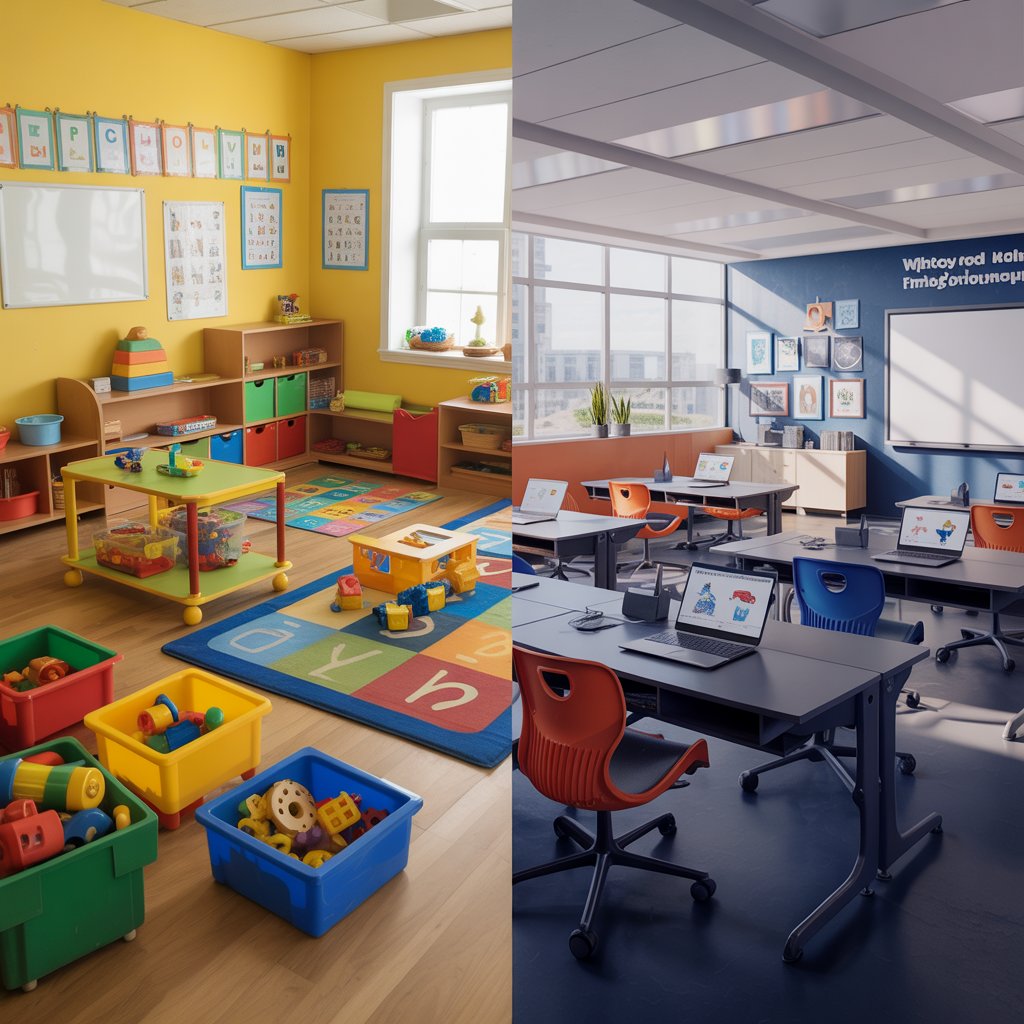
School architecture evolves across age groups — from early learning centers emphasizing sensorial exploration and safety to international K12 campuses designed for academic rigor, cultural diversity, and global exposure.
For play schools, layouts prioritize visibility, circulation flow, soft edges, and daylight with low-height partitions and biophilic elements. K12 international schools demand zoning for primary, middle, and senior blocks, with dedicated specialist areas, sustainable systems (HVAC zoning, daylight harvesting), and smart circulation planning for safety and accessibility.
Design language balances institutional identity with child-centered ergonomics, ensuring cohesive spatial hierarchies.

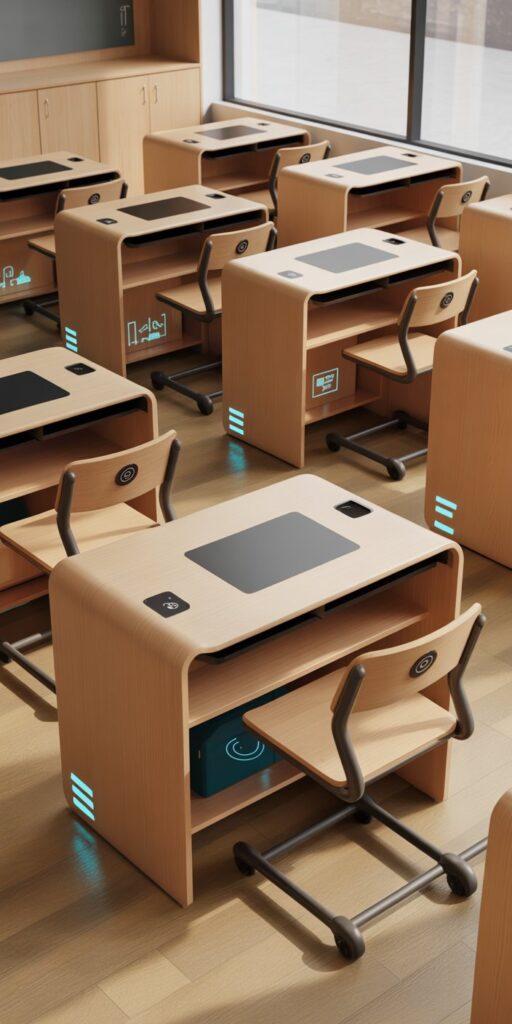
AI-aided furniture design systems

Material selection focuses on HPL or compact laminates, powder-coated steel frames, and eco-friendly finishes.
Integration with AI-aided furniture design systems and CNC-based mass customization ensures scalability from prototype to full manufacturing, aligning with NEP’s vision for flexible classrooms.

Adaptable Furniture Design and Manufacturing

Adaptability drives future-ready learning environments. Furniture must support multiple pedagogies — lecture, group work, maker activities, and self-learning.
Design principles include ergonomic dimensioning (ISO & BIS compliance), lightweight modular structures, height-adjustable systems, and stackable or foldable elements.

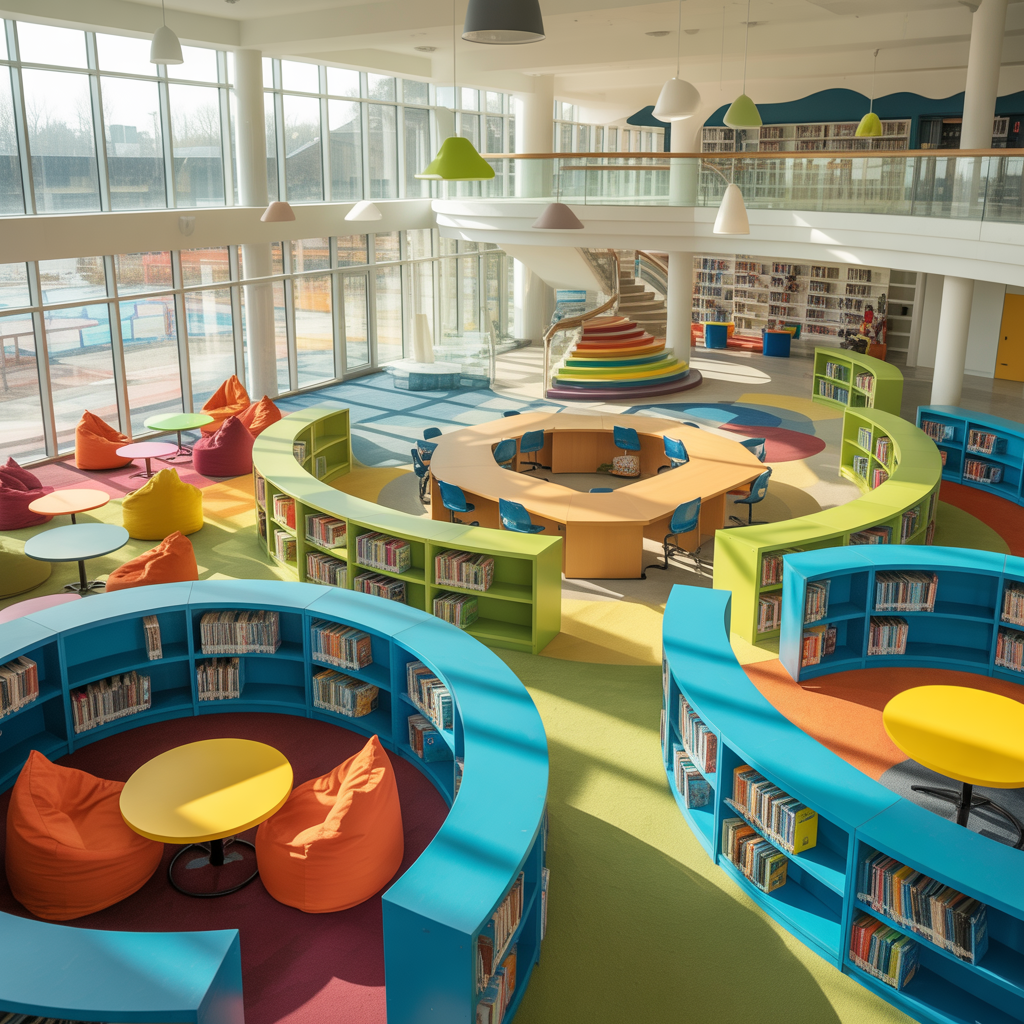
Library Design

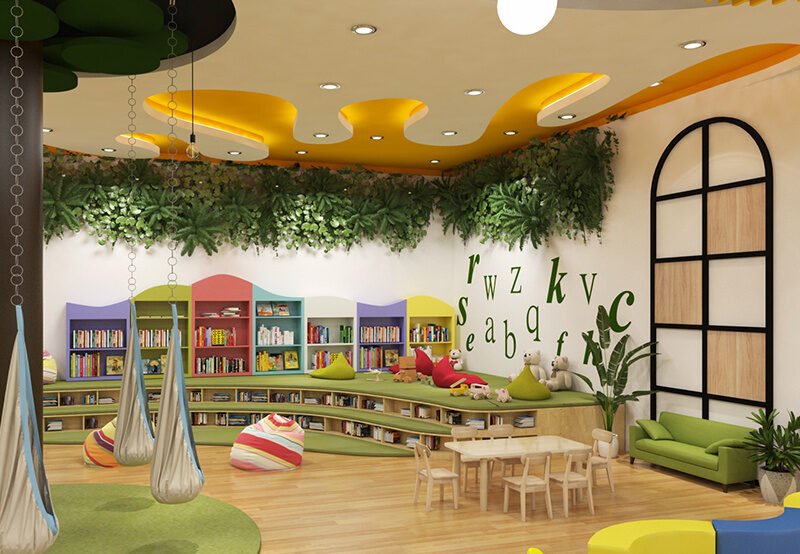
The modern library is a knowledge commons — merging quiet study with digital collaboration. Spatial planning differentiates silent zones, discussion pods, and digital media lounges.
Key considerations include acoustic insulation (35–45 dB rating), lux level optimization (~300–500 lux), and adaptive shelving systems that encourage visual openness.
Technology integration includes RFID book tracking, smart issue/return counters, and interactive touch-based catalogues.
Aesthetic focus remains on warm lighting, textured materials, and cognitive comfort, inviting users to dwell, explore, and learn.

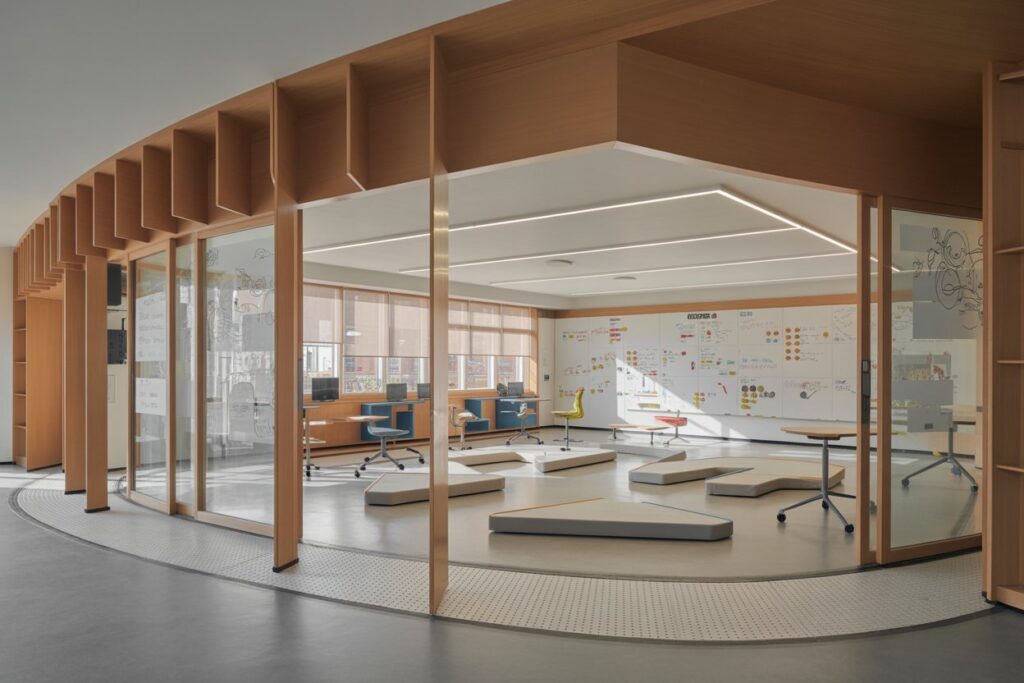
Blended, Flexible Learning Spaces design

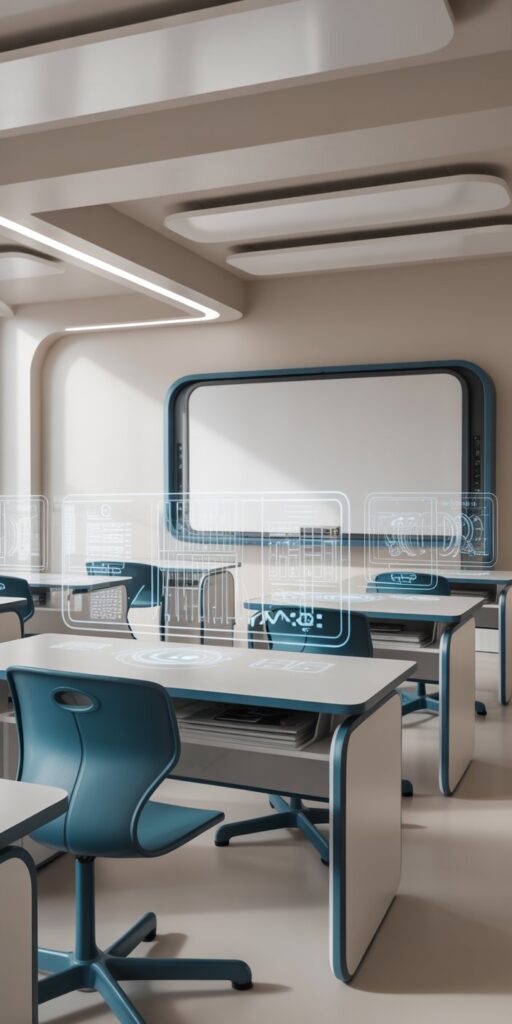
Next-gen classrooms are designed for pedagogical agility — shifting from rigid rows to fluid, multi-zone layouts.
Spaces feature mobile partitions, writable walls, modular seating, and movable AV setups, enabling seamless transition between lecture, discussion, and project modes.
Technical detailing includes raised flooring for cable management, acoustic baffles, and IoT-based environmental controls (temperature, CO₂, occupancy sensors).
Every element supports student-led learning, collaboration, and inclusion, turning classrooms into adaptive ecosystems rather than static enclosures.

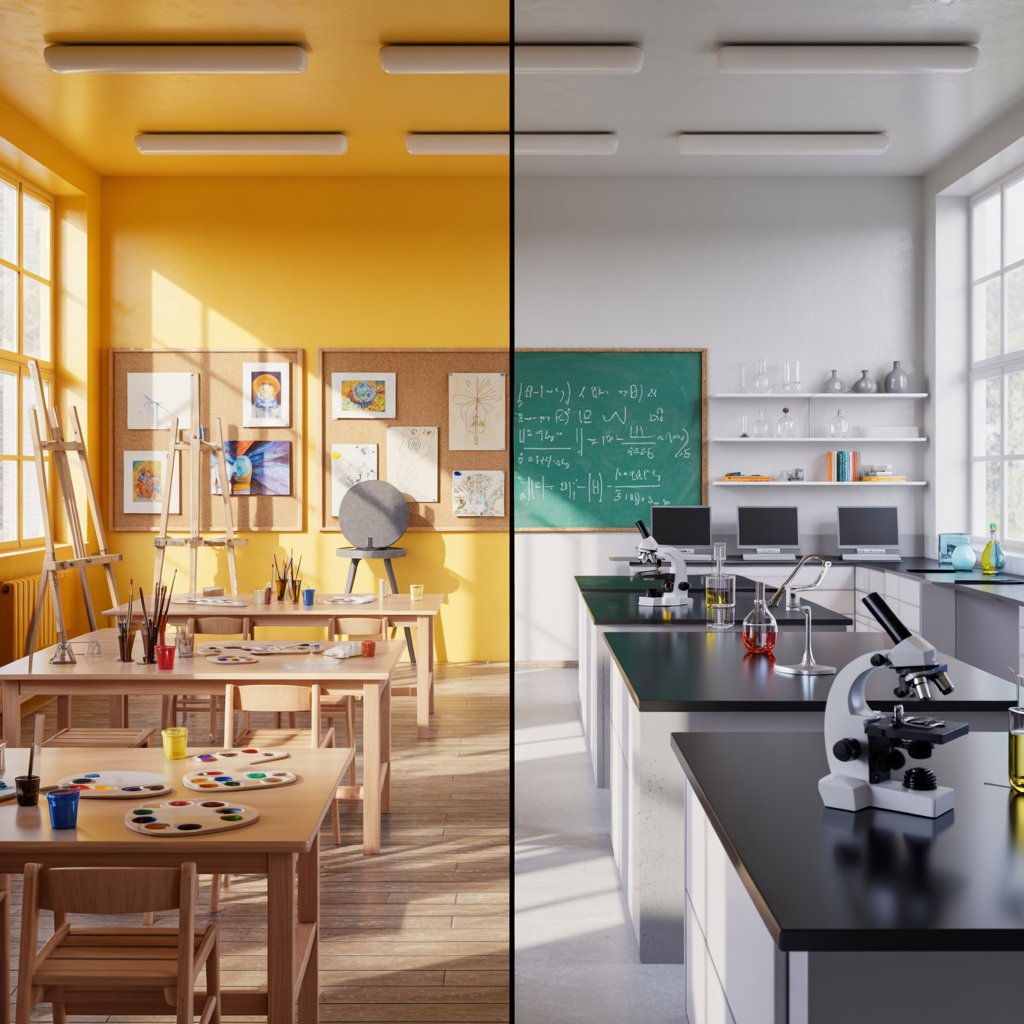
Art + Craft Spaces Design

Art studios are designed as open, light-filled, ventilated workshops supporting varied media — paint, clay, fabric, and digital tools.
Workstations feature washable surfaces, storage-integrated tables, and durable flooring (anti-slip, PU-coated).
Natural ventilation and north-lighting orientation (in India) ensure consistent, glare-free light.
Integration of display walls, digital sketch boards, and drying zones supports both traditional and contemporary art forms.

STEAM Labs and Maker Spaces Design

STEAM environments blend hands-on experimentation with digital prototyping. Spatially, they combine wet labs, dry labs, robotics, and design thinking zones.

Integration of AI simulation workstations, IoT learning kits, and modular lab benches supports inter-disciplinary learning.
Safety zoning, fire-rated storage, and visual supervision lines are mandatory.

Integration planning includes

Learning Management System (LMS) touchpoints,

Sensor-based attendance,

Energy-efficient HVAC linked to occupancy data — a complete ecosystem for immersive, data-driven learning

Smart Classroom Technology + Digital Learning Tools

Smart classrooms integrate hardware, software, and pedagogy. Design alignment ensures optimal sightlines for IFP panels, AI-enabled holobox teachers, and wireless device charging points.

SPORTS FACILITIES DESIGN CONFORMING TO FEDERATION PROTOCOLS

Sports design focuses on performance, safety, and sustainability. Indoor courts use sprung maple or vinyl sports flooring, while outdoor arenas adopt EPDM or synthetic turf systems with proper shock absorption and drainage gradients (1:100 slope).
Lighting follows lux standards (200–500 lux for indoor courts) with glare control baffles.
Facilities integrate locker rooms, hydration zones, and spectator seating with ADA accessibility.
Design coordination includes structural load analysis for equipment, acoustic control in enclosed courts, and provision for sensor-based performance tracking.
The goal: creating inclusive, high-performance environments for physical education and competition.

Ready to talk?

At schoolmart, We have the expertise in guiding you to set up your new campus project and help you maximize the performance of your campus while also figuring out your return. We have the expertise in guiding you to set up your new campus project and help you maximize.