







Creating learning environments that spark curiosity & Joy
Curiosity and joy in education is the magic sauce of engaged, motivated and successful students. The context, both physical, digital, and cultural, should first and foremost be explore and engaging in the creative and delightful space and, in the case of today, especially in AI-empowered classrooms. And here is your step-by-step guide to creating this kind of space so people can feel inspired and learn throughout their lives.
Step 1: Developed a Growth Mindset Culture
Actions:
Organize science of curiosity, joy and growth mindset workshops with educators and staff.
Be an example about being positive and curious like a teacher and a leader.
Appreciate errors and learning mistakes as a fuse rather than a dismal attempt.
TIP: Reward and monitor student effort and curiosity, not only performance with the use of AI-based analytics (e.g. an engagement tracking tool).
Step 2: Creating attractive, comfortable physical environments that are flexible
Actions:
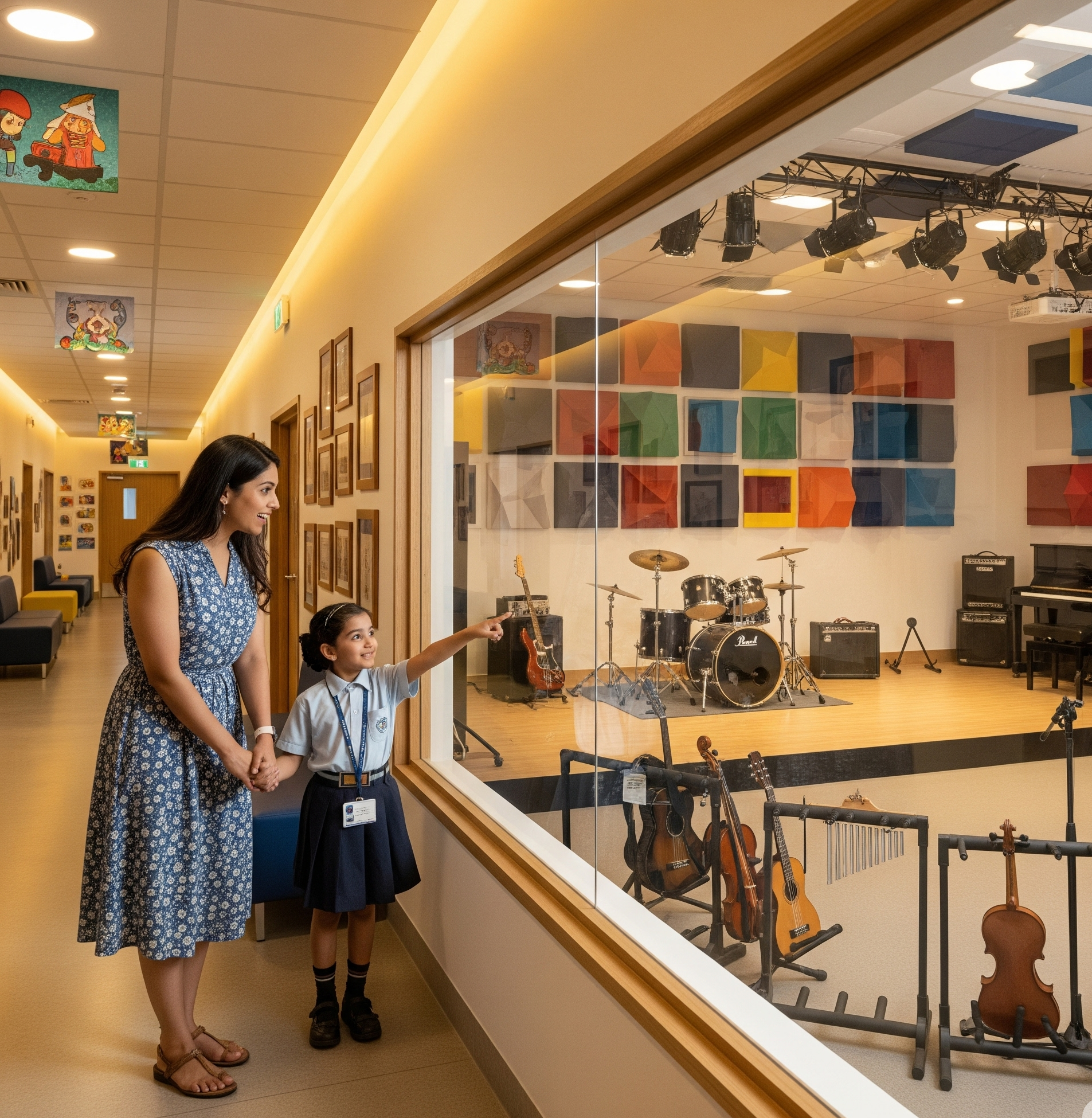
Divide the spaces into areas of collaborative, reflective and exploratory learning through the use of movable furniture, and natural light.
Add some bright colors, visual interest such as student art, plants, and interactive boards.
Provide discovery corners, with themes that rotate, science kits, books, puzzles and maker tools.
An example: Education institutions such as Ekya (Bengaluru) and Sunbeam (Sarnath) inculcate the use of flexible chair seating and colorful play wall so that the students are more attracted to the learning area.
Step 3: Playfully, Thinkingly Integrate Technology
Actions:
Install AI-enabled, individualized learning (adaptive quizzes, AI tutors), which act according to the interest and speed of students.
Immersive exploration in science, history and art with VR/AR.
Give access to digital creation tools to the students, coding kits, video editing, 3D modelling.
Hint: Combine screens with practicing activities in real life, so that it remains a positive and multisensory approach to the engagement.
Step 4: Incorporation of Inquiry-Based & Project Learning
Actions:
Develop lessons that will be based on open questions, practical experiments and authentic problems.
Promote projects that are student led, in which students select topics of interest.
Make use of AI to assist in creating ideas, brainstorming, and projects scaffold creatively.
Example: The Riverside School offers an “I CAN” design thinking program that allows students to work on a problem that they care about.
Step 5: Promote Social & Emotional Relations
Actions:
Include a “check in” or “circle time” on daily or weekly basis to talk about wonderings, questions, and experiences.
Teach SEL to provide trainers to foster empathy, curiosity and joyous collaboration.
Emotional well-being and engagement indicators can be tracked using AI dashboards.
Tip: Design buddy systems where the older learners are paired with younger ones thus making learning community-based.
Step 6:Personalize Learning Journeys
Actions:
Fill those pathways with adaptive content like suggestions of books, videos, experiments, or artistic challenges according to the areas of interest of the student.
Offer choice boards or menus that give students a list of options of interdisciplinary activities to choose.
Promote joy and difficulty journals or blogs.
Step 7: Make Families and Community Curiosity Partners
Actions:
Host “Family Curiosity Nights” with interactive learning centers and the demonstrations of work by students.
Post daily asking questions or wonder questions to discuss at home using WhatsApp or school apps.
Invite local specialists to talks with exciting elements, exhibitions and role models.
Step 8: Make Joy and Curiosity the New Pop Culture
Actions:
Exhibit project, experiments and creative work roused by curiosity both in school and on social media.
Create badges, certificates or digital rewards recognizing curiosity breakthroughs (e.g. Question Master, Creative Explorer).
Post normal experiences and experiences of fun and adventure.
Step 9: Application of the environment assessment and adaptation in a permanent way
Actions:
Survey and AI-based tools will allow getting feedback about things that bring joy and curiosity to students and teachers.
Examine space use and engagement, project completions and emotional well-being data.
Revise the physical space, electronic services, and even the teaching model.
Quick Action Checklist
| Step | Quick Task |
|---|---|
| Growth Mindset Culture | Run staff training and student workshops |
| Flexible Spaces | Rearrange classrooms for collaboration & creation |
| Thoughtful Tech | Introduce AI-powered adaptive platforms + VR/AR |
| Inquiry & Projects | Plan open-question-based lessons & student projects |
| SEL & Connection | Schedule regular emotional check-ins |
| Personalized Learning | Deploy AI-curated learning menus |
| Engage Families | Schedule Family Curiosity Nights |
| Celebrate Joy | Create monthly showcases & digital badges |
| Assess & Adapt | Quarterly feedback & data review |
Final Thought:
Creating learning environments bursting with curiosity and joy isn’t about flashy gimmicks—it’s about a deep commitment to human-centered design, personalization, and continual innovation. With the thoughtful integration of AI and passionate leadership, your school can become a vibrant ecosystem where every learner’s spark is nurtured into a lifelong flame.
Start today: gather your team, audit your environment, and ignite the journey to joyful learning together.